

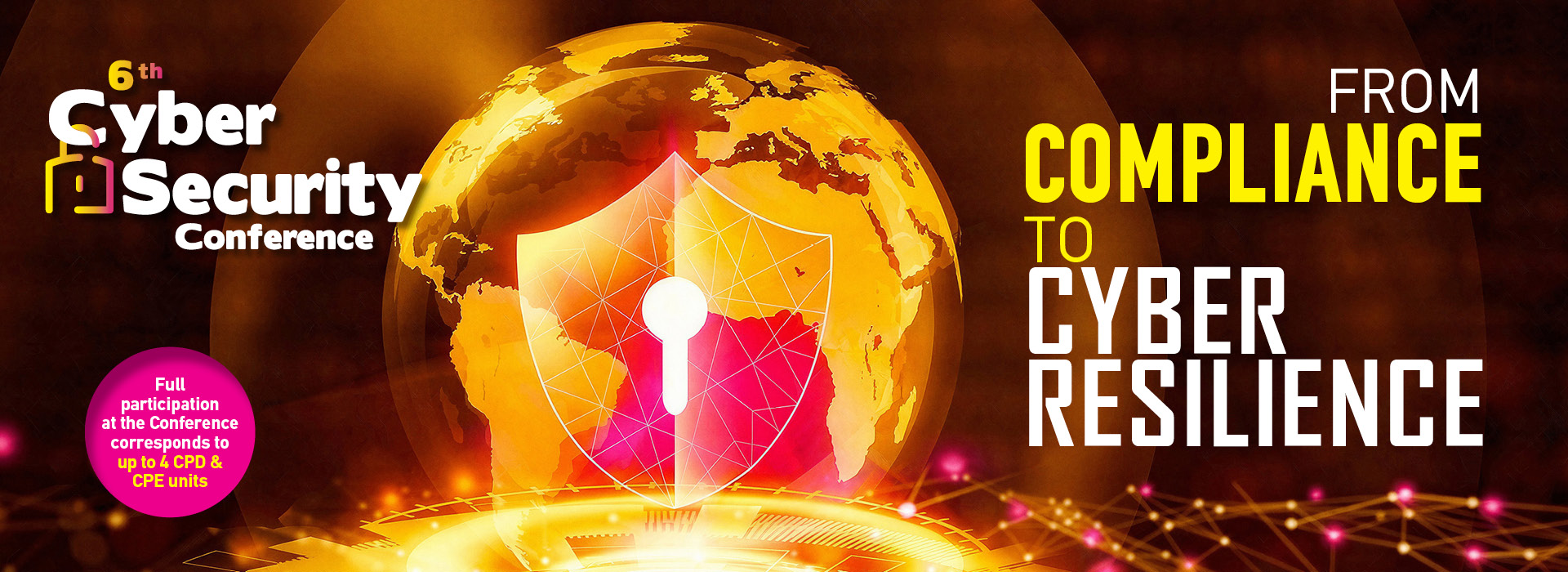

























As artificial intelligence becomes central to national competitiveness and organisational transformation, cybersecurity must be embedded from the outset. This discussion explores how Cyprus can accelerate AI adoption while building secure, trusted and resilient digital systems.



What Organisations Must Do to Prepare for the New Cybersecurity Reality
NIS2 introduces a new era of cybersecurity governance across Europe, significantly expanding obligations for organisations and increasing accountability at executive and board level. As enforcement approaches, organisations in Cyprus must move from awareness to operational readiness.
• Which organisations fall within scope
• Board and executive accountability
• Governance and reporting obligations
• Incident reporting requirements
• Third-party and supply chain risk
• Organisational readiness and enforcement expectations
• Challenges facing Cyprus-based organisations






What Financial Institutions Must Do Now
With DORA now reshaping the regulatory landscape across Europe, financial institutions are entering a new era of operational resilience, accountability and continuous preparedness. Beyond compliance, organisations must demonstrate their ability to withstand, respond to and recover from ICT-related disruption under real operating conditions.
The discussion explores the practical realities, challenges and expectations surrounding DORA implementation, as financial institutions strengthen resilience frameworks, manage third-party risk and prepare for increasing regulatory scrutiny.





This presentation provides an overview of the evolving European cybersecurity and digital standardization landscape, with a particular focus on the Cyber Resilience Act (CRA) and the AI Act. It explores the key harmonized and international standards supporting regulatory compliance, including cybersecurity, artificial intelligence, privacy, cloud services, digital identity, and emerging technologies. The session explains how standards translate legal requirements into practical technical solutions, helping organizations strengthen cyber resilience, build trustworthy digital products and services, and prepare for future regulatory developments. Participants will gain a clear understanding of the role of standards in enabling secure, innovative, and compliant digital transformation across Europe.


Examining the impact that Frontier AI and open weight models are having on the risk profile across many enterprises and the steps that all enterprises must take now to be prepared. As the largest Infrastructure services provider globally Kyndryl supports mission critical services across many sectors and has a unique perspective on how the enterprise needs to get prepared for the new Frontier AI threat.

What happens when something appears perfectly safe — until the evidence tells a completely different story? In cybersecurity, the line between confidence and reality is often thinner than we think. Behind polished dashboards, mature-looking controls, and well-presented security claims, critical weaknesses may still remain unnoticed. As AI changes the speed of both offensive and defensive cyber operations, this gap becomes more important than ever — and far more difficult to ignore.

Every organization has a perimeter. Most believe it is secure. It isn’t. Files move freely across every boundary through emails, USB devices, web portals, and file-sharing platforms. Trusted by users and overlooked by traditional defenses, they have become the most exploited entry point in modern organizations. This session explores why perimeter-security assumptions are no longer sufficient, how file-based threats enter through seemingly legitimate channels, and the direct link between file-level prevention and operational resilience with practical, actionable measures organizations can adopt to reduce exposure without disrupting business operations.

Organisations take an average of 311 days to detect and contain a breach. An AI-assisted attack begins exfiltrating data in 11 minutes. A. Konstantinides explains why the attacker now operates as an autonomous agent and why defense must run at machine speed. From the human-speed SOC to the Autonomous SOC: detection in seconds, containment before data leaves, AI cutting the noise while people decide.

How CEOs Are Rethinking Risk, Resilience & Leadership
Cybersecurity is no longer only a technology or compliance issue. As cyber threats, operational disruption and regulatory expectations continue to intensify, leadership teams and boards are increasingly required to approach cybersecurity as a core business and resilience priority. How organisations are rethinking cyber risk, operational readiness and leadership responsibility in an increasingly unpredictable digital environment?

The question is no longer whether a cyber incident will happen. The question is whether organizations are prepared for the day it does. Built around a cyber crisis scenario the discussion will explore what organisations can do to be best prepared when a major cyber-incident happens.


Organizations are facing an increasingly complex and rapidly evolving threat landscape, making it more difficult than ever to identify which risks matter most. By transforming intelligence into action, security teams can strengthen their defensive posture, improve resilience, and shift from reactive security operations to a more proactive and intelligence-led approach.

Discover how the new Symantec CBX platform unites Symantec and Carbon Black to eliminate tool silos and streamline security operations. Join this session to explore core capabilities, real-world customer solutions, and a unified defense strategy that competitors cannot match. Don’t miss this exclusive look at the next evolution of enterprise security!

As AI accelerates the speed, scale, and automation of cyberattacks, compliance alone is no longer enough. This session explores the shift from compliance to true cyber resilience: the ability to adapt while under attack. We will examine how distributed infrastructure, autonomous AI agents, and long-term data protection are reshaping security strategies, and identify practical questions organizations should ask to assess whether they are truly resilient.

Strategic Partner

Sponsors




Supporter




With the Support of

Coffee Sponsor
Organisers

Under the Auspices
Communication Sponsors